
Open vs. Enclosed Car Transport: Which Shipping Option Is Right for You?
Choosing between open and enclosed car transport is one of the most important decisions customers make when arranging vehicle shipping.
Both methods are designed to move automobiles between locations, but they differ in price, equipment, protection, and availability.
Understanding these differences can help you choose a service that fits your vehicle and budget.
What Is Open Car Transport?
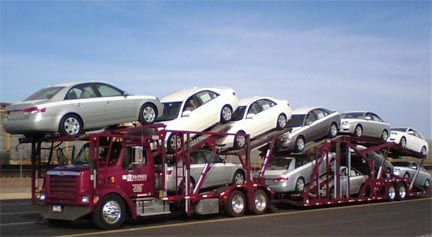
Open car transport uses an uncovered trailer that can carry several vehicles simultaneously.
These carriers are commonly used by dealerships, manufacturers, and individual customers.
Because open carriers can transport multiple automobiles on a single trip, this method is generally more affordable than enclosed transportation.
Open transport is often suitable for sedans, SUVs, pickup trucks, and everyday passenger vehicles.
However, automobiles remain exposed to weather, dust, and ordinary road conditions.
What Is Enclosed Car Transport?
Enclosed car transport moves vehicles inside covered trailers.
These trailers provide additional protection against rain, dust, wind, and road debris.
Enclosed shipping is commonly selected for luxury automobiles, classic cars, exotic vehicles, restored models, and collector automobiles.
Some enclosed carriers offer specialized loading equipment, although equipment availability must be confirmed before booking.
Key Differences Between Open and Enclosed Shipping
| Feature | Open Transport | Enclosed Transport |
|---|---|---|
| Cost | Generally lower | Generally higher |
| Weather exposure | Exposed | Reduced |
| Road debris exposure | Greater | Reduced |
| Carrier availability | Typically broader | Often more limited |
| Ideal vehicles | Everyday cars | Luxury and specialty cars |
| Trailer design | Open-air | Covered |
Which Option Is More Affordable?
Open car shipping is generally more affordable because open carriers can transport more vehicles.
Enclosed carriers often have fewer available spaces and may require specialized equipment.
The exact difference in cost depends on the route, vehicle dimensions, scheduling, and carrier availability.
For a standard family vehicle, open transport may provide the most economical option.
For a high-value collector vehicle, the additional cost of enclosed transport may be justified by the reduced environmental exposure.
Which Option Offers Better Protection?
Enclosed transport offers greater protection from weather and road debris because the vehicle travels inside a covered trailer.
Open transport does not provide the same environmental barrier.
However, neither option completely eliminates the possibility of damage during loading, transportation, or unloading.
Customers should document vehicle condition and review the carrier’s insurance coverage and exclusions before shipping.
Which Option Is Faster?
Neither transportation method is automatically faster.
Transit time depends on distance, route planning, traffic, weather, pickup scheduling, and carrier availability.
Because open carriers are more common, customers may find more scheduling options on certain routes.
Enclosed transportation can require additional planning, particularly for less frequently traveled destinations.
When Should You Choose Open Transport?
Open shipping may be appropriate when you’re transporting an everyday vehicle, trying to control costs, moving between states, or shipping a car that does not require specialized environmental protection.
It is a practical option for many standard transportation needs.
When Should You Choose Enclosed Transport?
Consider enclosed shipping when your vehicle has substantial collector value, rare exterior components, custom paintwork, or a delicate finish.
It may also be preferable when transporting a classic automobile to an auction or exhibition.
Owners of exotic and luxury vehicles may appreciate the additional protection provided by a covered trailer.
Making the Right Decision
The best transportation method depends on your priorities.
If affordability and broad availability are most important, open transport may be the better fit.
If reduced exposure to weather and road debris is a higher priority, enclosed transportation may be preferable.
You should also consider vehicle clearance, dimensions, operational condition, and the available carrier equipment.
Final Thoughts
Open and enclosed car transport both offer useful solutions for vehicle shipping.
Understanding the differences helps customers select transportation based on their actual needs rather than price alone.
Not sure which service to choose? Contact Keystone Car Shippings to discuss your vehicle and explore available open and enclosed shipping options.